
If the COVID-19 pandemic has shown us anything, it is that women’s vulnerabilities are exacerbated due to systemic gender inequalities. As these inequalities persist, the consequent effects of decarbonising towards a greener economy may yet show how much more vulnerable women are if we don’t pursue a just energy transition. It is critical for women, especially women in Africa, to become leading voices of decarbonising towards a greener economy.

Women are at the coalface of climate change
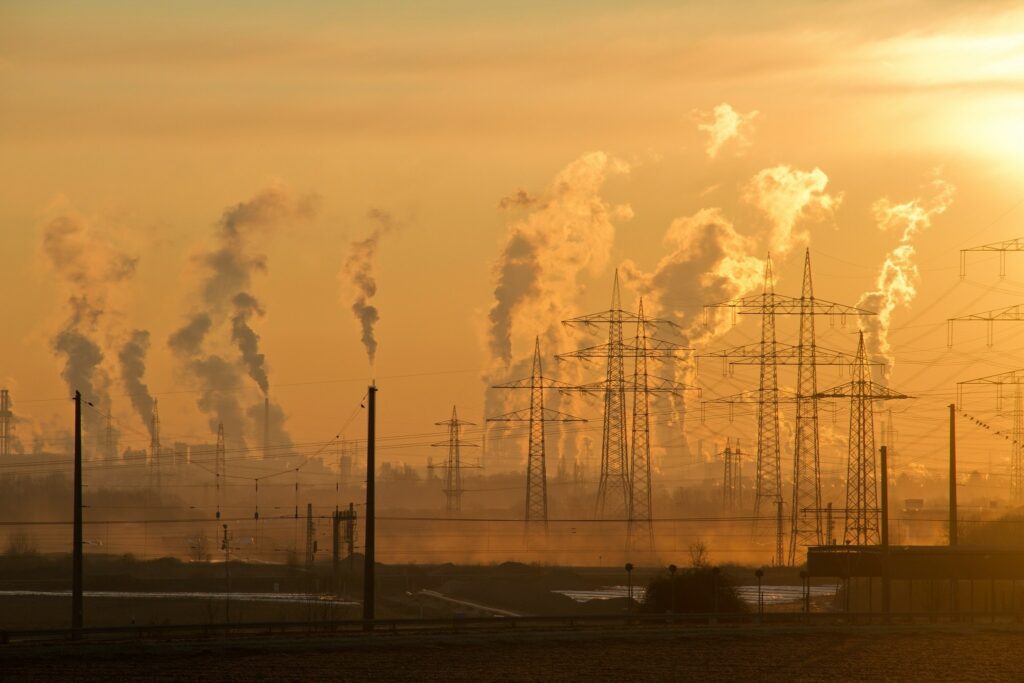
Decarbonising the energy sector is essentially about reducing our unsustainable reliance on fossil fuels that threaten our environment’s climate resilience. Across the world, countries rely mostly on fossil fuels such as coal, natural gas, oil, and nuclear energy to power global economies. The present European Union crisis brought about by the Russia-Ukraine conflict has seen some countries that were on a path to decarbonising compelled to re-ignite coal power stations. Aside from the political conflict, this additionally exacerbates the climate challenge to reduce greenhouse emissions that threaten to raise global warming beyond the 2°C mark. If we are to chart a path towards a greener economy, then our reliance on fossil fuels must decrease, including coal.
Most African countries are coal-free; however, South Africa is among those that still rely heavily on coal for the national energy grid. And so here, as in other parts of the world, the science of climate change features front and centre in many corporate boardrooms and conference panel discussions due to unreliable generation capacity with our electricity supply. A big part of South Africa’s decarbonisation will lead to the reduction of coal-powered power plants, and consequently the reduced operations of coal mines. However, coal mines in South Africa are leaving a legacy of ruin, with no fewer than four hundred coal mines left unrehabilitated and many simply abandoned, adding to local and global pollution. Moreover, this has a spill-over effect on small town economies and the sustainability of those communities. Many of these coal mines are located in mining towns whose economies are reliant on mineral industrialisation. But research has shown that decarbonising the energy sector will have significantly more impacts on women. We need solutions for climate resilience and innovations for renewable energy production to be gender responsive. Even more so for women and youth in the remote and rural communities whose economies survive on the minerals industry.
A just energy transition towards a greener economy
A just energy transition must be economically feasible, socially acceptable, and equitable across genders. If we fail to define and direct the energy transition through a gender lens, we risk the increase of negative impacts on women such as restricted access to energy technologies, and finance opportunities. In a country like South Africa, the negative impacts on women can exponentially multiply in terms of business opportunities and availability of jobs, social security, and residential care work. Most women’s identities, by virtue of gender and race, intersect in varying degrees across these socio-economic contexts.
1. Employment opportunities
A lack of generation capacity affects both big and small businesses. Big businesses are beginning to restructure their workforce in an effort to optimise their operations in the face of unreliable power supply. Not all have made the transition to alternative renewable energies. In the event that businesses do restructure, workers can be retrenched and/or furloughed. In any event, when roles are made redundant or terminated, it usually begins with the least critical business units, the ones deemed to be support functions. And in many cases, these are jobs that are traditionally occupied by women across many sectors. The ripple effects tend to affect other small businesses that serve as service providers to big business and are benefitting from the ecosystem in the surrounding districts of big business.
2. Social mobility and safety
With South Africa’s energy parastatal battling to meet demand, we also see how extended power outages have not only affected transport mobility in metropolitan areas, but also begun to dictate social mobility. Criminality tends to thrive in the dark and when there’s no power, security systems are offline, streets are darkened, and people are more reluctant to leave their homes to patronise restaurant establishments and entertainment venues. This holds even more sway with women who already feel unsafe in a country grappling with a GBV (gender-based violence) pandemic.
3. Home-based care work
Women, on top of showing up in their daily jobs as breadwinners, also carry the burden of unpaid care work at home as mothers, wives and caregivers. With children that need attention and supervision, elderly parents that are at times incapacitated due to illness or old age, and even their personal development ambitions outside of work (such as further studies and home-based businesses for additional income streams), a women’s work is never completely done. When there is no power supply at home, it adds complexities and frustrations when all of these commitments have to be attended to. So we need strategies and platforms that actively work to help women bridge the gap between decarbonisation and climate resilience by ensuring that the change that happens is led by decision makers and changemakers who speak as women and for women.
If we fail to define and direct the energy transition through a gender lens, we risk the increase of negative impacts on women such as restricted access to energy technologies, and finance opportunities.

So how can you help women lead in the energy transition?
We have the opportunity to engage more women in the climate change discourse. Women bring in a blend of leadership instinct, thinking, and execution that can harmonise the variable socio-economic contexts because of their lived experiences. Here are three ways that you can help women lead in a just energy transition.
1. Sustainability and Gender Parity in the minerals and energy sector
Elevate the visibility of women leaders in corporate companies, non-profits, and government departments in the minerals and energy sector, and parallel streams in science and innovation, and trade and industry. We need a cultural shift that is driven by leadership and political will to transform our businesses and governance. We need to see more women appointed to executive positions and board services, supported through corporate sponsorships as thought leaders, and advanced through change and transformation policies that truly embed diversity, equity, and inclusion.
2. STEAM Entrepreneurship development and Career coaching
Any job can be a woman’s job. This is not a man’s world. We can all contribute with unique strengths as women, even in sectors that are traditionally male dominated. Train young girls in science-related disciplines, encouraging them to pursue careers in science, technology, engineering, and mathematics. This is an education investment that needs to be cultivated from early childhood if we are serious about developing a pipeline of STEM graduates and young professionals that is more diverse. And let’s take the journey further with intrapreneurship, career coaching, professional mentoring, and entrepreneurship development. Women and girls everywhere are doing amazing things with innovative solutions and new technologies. They can go further.
3. Inspiring behaviour change through climate science communication
And don’t leave the Arts behind. It’s a necessary element of STEAM education and business. Engage the creative economies (design, performance, culture) to collaborate with business and academia in science, impact and innovation. Creatives are essential if we want to build inclusive economies. They have a way of pairing indigenous knowledge systems, rich in resilience and development practices, with modern science and technology to craft social change campaigns that inspire and propel society to explore optimised ways of living and consumption, change patterns of behaviour, and build social cohesion. If we leave climate science communication only to the experts, we risk leaving the masses oblivious and ignorant to their detriment. Creativity and change work hand in hand to shift culture.
And who better than women to take the lead. At Dr Makoti, this is our heartbeat. To see women expand their influence in science and impact. We are not just here for their spotlight. We are also here for the curtain call, the backstage preparations, and the mic drops. Climate change is here. So let’s keep talking.